✨ Skin Resurfacing Lasers
CO2 and Er:YAG fractional laser systems are used in professional skin-resurfacing workflows for texture, scarring and renewal concerns.
1.How It Works
Technology, configuration and operating procedures vary by device. Review the manufacturer specifications, intended use and professional guidance before treatment.
2.Types of Devices
- Home-use devices for personal routines
- Professional systems for clinics, salons and spas
- Multi-function platforms with interchangeable handpieces
3.What to Look For
- Technology, output and treatment area
- Safety features, certifications and operator training
- Maintenance, service support and included accessories
Safety first: Verify certifications, operating instructions and user suitability before treatment. Professional devices should be operated by trained personnel.
4.Devices in This Category
Explore 62 devices in Skin Resurfacing Lasers. Specifications are compiled from source listings and may vary by configuration.
FDA: unverified
Skin Resurfacing Lasers
Beijing Goldenlaser Medical CE Beauty Equipment Fractional CO2 Laser
FDA: unverified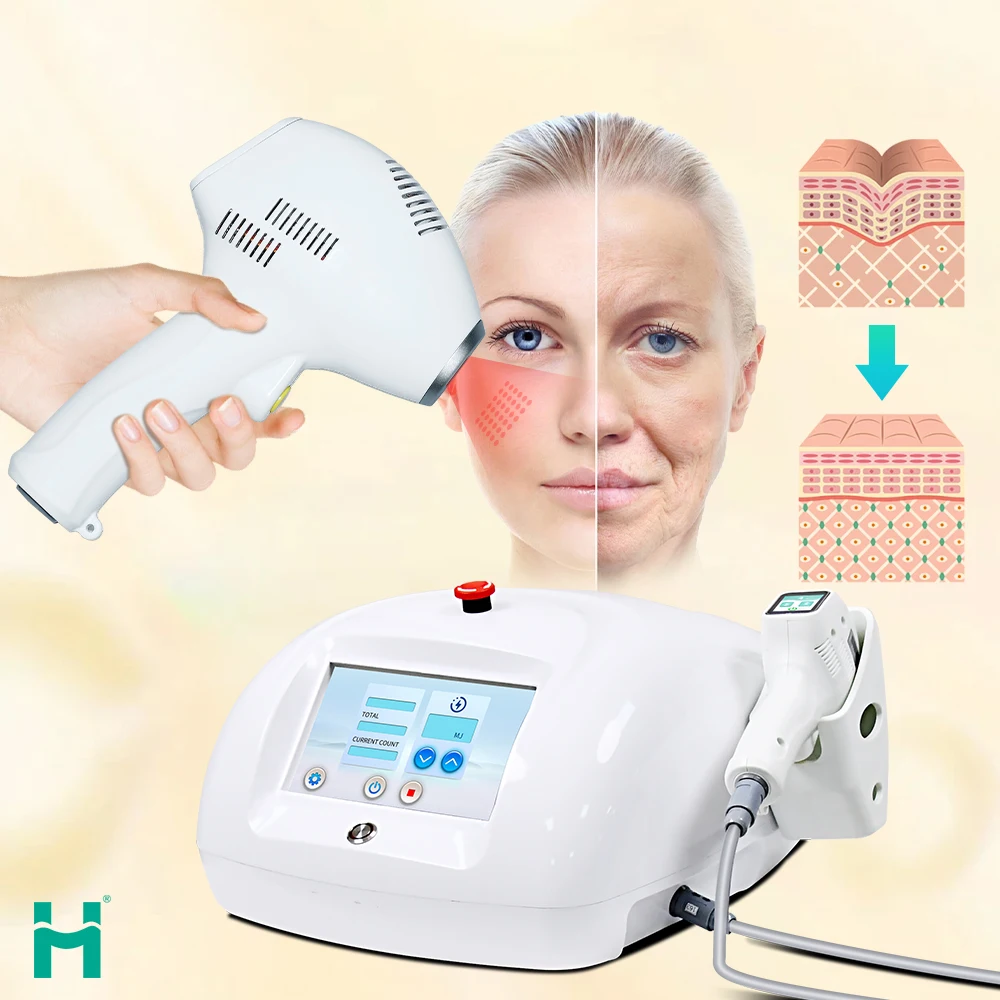
Skin Resurfacing Lasers
Portable 1470nm Diode Laser Beauty Equipment for Wrinkle Remover
5.Frequently Asked Questions
What should I look for in Skin Resurfacing Lasers devices?+
Compare the technology, specifications, safety features, intended use and after-sales support. Confirm the final configuration with a qualified supplier.
CO2 vs Er:YAG: which is better for acne scars?+
CO2 fractional (10,600 nm) and Er:YAG (2,940 nm) lasers both resurface skin but differ in depth and recovery. CO2 lasers are absorbed by water 70× more readily than Er:YAG, producing deeper thermal coagulation, stronger collagen contraction, and more dramatic results—but requiring 5–10 days of social downtime. Er:YAG lasers offer near-pure ablation with minimal heat, leading to faster healing (3–5 days) but less collagen stimulation.
**For acne scars specifically:** CO2 fractional is generally the superior choice for deeper, atrophic scars (ice-pick, boxcar, rolling types) because the thermal effect stimulates robust dermal remodeling. Er:YAG can be effective for superficial scarring or patients with Fitzpatri ck III–IV skin who need less thermal risk. Some clinics use a combined CO2 + Er:YAG approach: CO2 for deep ablation and collagen stimulation, Er:YAG for precise surface refinement.
**Confidence: High** — This is well-established in dermatology literature (Manstein et al., 2004; Kauvar, 2015). Buyer note: verify the specific platform's fractional mode capabilities and pulse architecture when comparing for scar revision.
Are these devices suitable for everyone?+
Suitability depends on the device and the individual. Review the manufacturer guidance and consult a qualified professional before treatment.
RF Microneedling: what needle depth is needed for different concerns?+
Needle depth in RF microneedling is the primary lever for targeting different tissue depths and concerns. General clinical guidelines:
- **0.5–1.0 mm**: Superficial fine lines, skin texture, enlarged pores, mild pigmentation — targets the papillary dermis.
- **1.0–2.0 mm**: Moderate wrinkles, mild-to-moderate acne scars, skin tightening — targets the reticular dermis.
- **2.0–3.5 mm**: Deep wrinkles, severe acne scars, atrophic scars, significant skin laxity — targets deep reticular dermis.
- **3.5–7.0 mm**: Subcutaneous tissue for body contouring, deep scars, or enhanced collagen remodeling in thicker skin areas.
**Critical nuance:** RF microneedling with insulated needles (gold-coated tips) deposits energy primarily at the needle tip, sparing the epidermis. Non-insulated needles deliver energy along the entire shaft, useful for skin resurfacing but with higher epidermal risk.
**Confidence: High** — Consistent with clinical consensus and device protocols from InMode (Morpheus8), Lutronic (Infini), and peer-reviewed fractional RF literature. Always adjust for anatomical area: periorbital skin is thinner (1.0–2.0 mm max) vs. cheeks or body (2.0–4.0 mm).
How long is downtime after CO2 fractional laser?+
Downtime after CO2 fractional laser varies significantly by treatment depth and device settings, ranging from **3 days to 14 days** of visible recovery.
- **Light / superficial fractional CO2** (low density, shallow depth): 3–5 days of mild redness and flaking. Patients can often resume social activities with makeup by day 4–5.
- **Medium-depth fractional CO2** (standard aesthetic settings): 5–7 days of erythema, edema, and peeling. Full social recovery typically by day 7–10.
- **Deep fractional CO2** (full erbium-like resurfacing parameters): 10–14 days of significant erythema, oozing, and desquamation. Reserved for severe scarring or photoaging.
**Post-treatment care:** Avoid sun exposure for 2–4 weeks; use SPF 50+ zinc oxide sunscreen. Keep skin moisturized; avoid actives (retinoids, AHAs) for 2–4 weeks. Expected transient hyperpigmentation risk peaks at 2–4 weeks post-treatment, especially in Fitzpatrick IV–VI skin.
**Confidence: High** — Consensus across ASDS guidelines, manufacturer protocols, and clinical studies (Sardana & Ranjan, 2020).
Can RF microneedling be combined with other treatments?+
Yes — RF microneedling combines safely and synergistically with several other aesthetic treatments when sequenced correctly.
**Safe combinations:**
- **PRP (Platelet-Rich Plasma)**: Apply topically during or immediately after RF microneedling to leverage micro-channels for enhanced penetration. Commonly paired for accelerated healing and improved outcomes.
- **Hyaluronic acid serums/dermal fillers**: RF microneedling can be performed 2–4 weeks after filler placement; avoid same-session combination to prevent migration.
- **Botulinum toxin**: Can be combined in a staggered approach (RF microneedling → 2 weeks later toxin) for comprehensive rejuvenation.
- **Non-ablative laser (e.g., 1064nm Nd:YAG)**: Safe when spaced 2–4 weeks apart; sequential combination is rare in practice due to cumulative downtime.
**Avoid combining on the same day:** RF microneedling + light chemical peels, ablative lasers, or IPL — the cumulative thermal/chemical insult raises the risk of PIH, burns, and prolonged erythema.
**Confidence: High** — Supported by clinical consensus and manufacturer guidelines. Verify specific device FDA clearances for combination claims.
What skin types are safe for ablative laser resurfacing?+
Ablative CO2 laser resurfacing is **most safely performed on Fitzpatrick Skin Types I–III** (light skin). Type IV skin can be treated with caution using conservative parameters. Types V–VI carry significantly elevated risk and require highly experienced operators.
**Risk breakdown:**
- **Fitzpatrick I–III**: Lowest risk of post-inflammatory hyperpigmentation (PIH). CO2 fractional is the gold standard for this demographic.
- **Fitzpatrick IV**: Moderate PIH risk. Use lower fluences, shorter pulses, longer intervals, and rigorous pre- and post-treatment sun protection (4–6 weeks before and after).
- **Fitzpatrick V–VI**: High PIH risk; some practitioners avoid fully ablative CO2 entirely. Consider non-ablative 1550nm fractional or RF microneedling as safer alternatives.
**General guideline:** The more melanocytes present (darker skin), the greater the PIH risk from thermal injury. Pre-treatment with hydroquinone 2–4 weeks prior can be used in skin types IV–V under physician guidance.
**Confidence: High** — Established dermatology consensus (Fitzpatrick, 1988; subsequent clinical guidelines). Always perform a test spot for darker skin types.