BioGlow Microcurrent and LED Portable
.embed-container { position: relative; padding-bottom: 56.25%; height: 0; overflow: hidden; max-width: 100%; } .embed-container iframe, .embed-container object, .embed-container embed { position: absolute; top: 0; left: 0; width: 100%; height: 100%; } SKU: 091
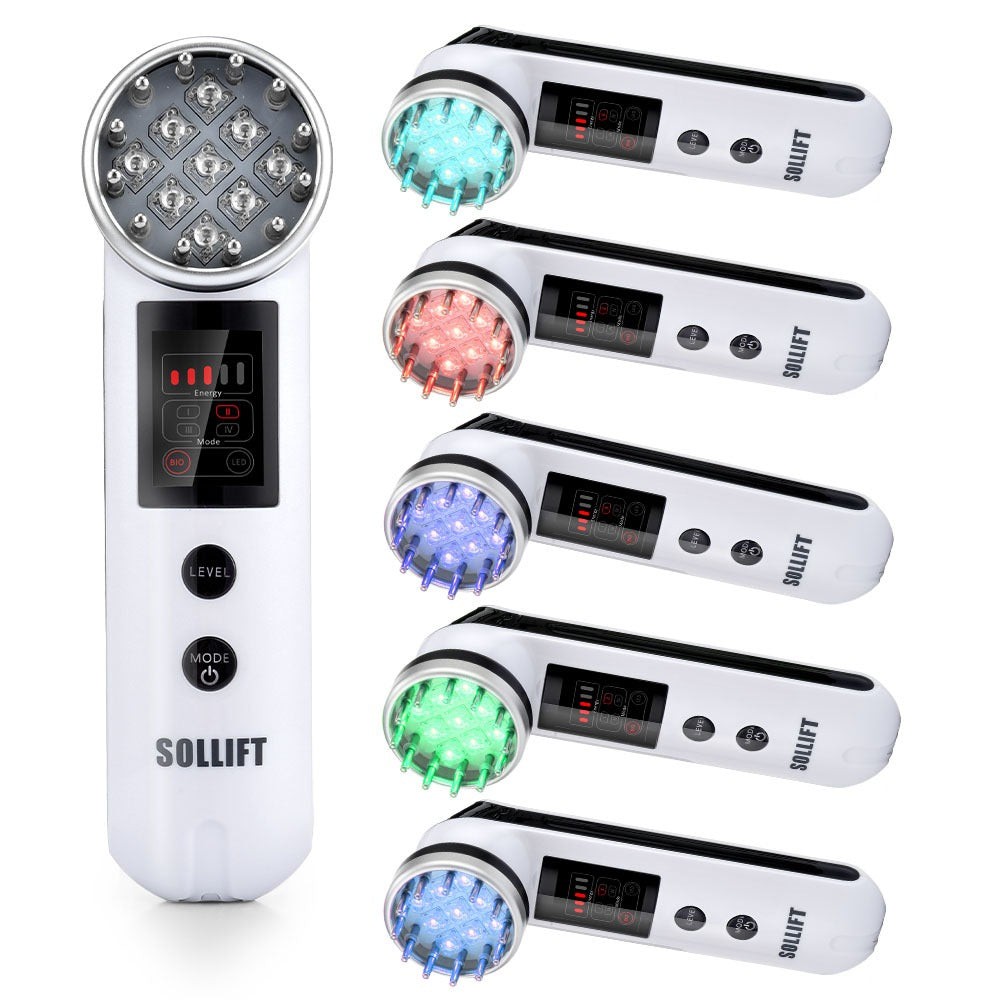
1.What It Is
The BioGlow combines microcurrent (5 intensity levels) & 7-color LED therapy for facial firming, toning & skin rejuvenation. Compact, portable, at-home or in-office.
2.How It Works
It uses microcurrent with 5 intensity levels alongside 7-color LED therapy to firm, tone, and rejuvenate the skin.
4.Who It's For
It is designed for at-home or in-office use by anyone seeking facial firming, toning, and skin rejuvenation.
Important: This device page is informational. Verify certifications, operator training, and suitability with a qualified professional before treatment.
5.Frequently Asked Questions
What is the BioGlow Microcurrent and LED Portable and what does it treat?+
The BioGlow Microcurrent and LED Portable is a dual-modality facial device combining microcurrent with 7-colour LED therapy. It is designed for facial firming, toning and skin rejuvenation, and can be used both at home and in-office. The listing describes it as compact and portable, and specifies five microcurrent intensity levels plus seven LED colours.
**Key points:**
- Modalities: microcurrent (5 intensity levels) plus 7-colour LED light therapy in one handheld unit.
- Claimed outcomes per the listing: facial firming, toning and skin rejuvenation.
- Form factor: compact and portable, suitable for at-home or in-office use.
- Microcurrent provides the lifting/toning mechanism (muscle and tissue stimulation); the 7-colour LED provides a complementary photobiomodulation step - the two are complementary rather than duplicative.
- Note: the listing publishes no LED wavelengths or irradiance figures, so the 7 colours cannot be matched to specific clinical targets from this data alone.
**Business case:** A dual-modality handheld is the cheapest way for a clinic to offer both a microcurrent and an LED service with one purchase, and its portability makes it usable for mobile/event work and retail sale alongside treatment - but without published wavelengths you cannot substantiate colour-specific clinical claims, so market it on firming and toning rather than on specific LED indications.
**Confidence:** High for the modalities, intensity levels, colour count, claimed outcomes and dual-use positioning - all stated in the product record; Low for any colour-specific clinical mapping, since no wavelengths are published.
**Evidence source:** Product listing `bioglow` (id=716), fields: lede, what_it_is, how_it_works, who_for.
Is the BioGlow Microcurrent and LED Portable FDA cleared or CE marked?+
The regulatory status of the BioGlow Microcurrent and LED Portable cannot be confirmed from the current product data. The structured fields `fda_key`, `fda_label` and `fda_tone` are empty, and the listing text contains no FDA clearance, CE marking or equivalent certification claim. No conclusion can be drawn about either clearance or non-clearance.
**Key points:**
- `fda_key`, `fda_label` and `fda_tone` are all empty on the product record.
- No regulatory statement appears in the lede, what_it_is, how_it_works or who_for fields.
- The listing explicitly positions the device for at-home or in-office use, which is the profile of a consumer cosmetic device rather than a cleared professional medical device - the regulatory burden is correspondingly lower, but the marketing claims must stay cosmetic.
- LED devices can attract FDA scrutiny when marketed for therapeutic outcomes (wound healing, acne treatment, pain), which would move them into Class II territory and require 510(k) clearance - so the claim wording used in your marketing matters.
- Note also that the product record's `lede` field contains raw CSS/HTML embed markup rather than product copy - a data-quality issue in the listing itself; the usable descriptions are in the `what_it_is`, `how_it_works` and `who_for` fields.
**⚠️ FLAG - procurement verification required.** Before purchase, obtain from the supplier: (1) the device's regulatory classification in your market (cosmetic equipment versus medical device) and any FDA 510(k) number if one exists, plus the cleared indications it covers, (2) CE marking documentation to EU MDR 2017/745 or UKCA evidence, (3) a signed regulatory status letter on company letterhead, (4) IEC 60601-1 or applicable electrical safety certification, and (5) LED wavelength and irradiance specifications, since the listing publishes none.
**Business case:** Dual-modality consumer-grade devices are attractive on price but shift the compliance burden onto the clinic's marketing copy; if you advertise the LED element for a therapeutic indication you have effectively reclassified the device yourself.
**Confidence:** Low - no FDA or equivalent regulatory information of any kind is present in the product data, so no status can be stated; the listing's own `lede` field is corrupted with CSS markup, reducing the reliability of the record overall.
**Evidence source:** Product listing `bioglow` (id=716), fields: fda_key, fda_label, fda_tone, lede, what_it_is, how_it_works, who_for (all regulatory fields empty; lede contains CSS/HTML embed markup, not product copy).
What is the BioGlow treatment protocol - how many sessions and how often?+
The listing documents the modalities and the five microcurrent intensity levels but publishes no session count or interval schedule for either modality. Use the standard protocols for this device class and confirm the details with the manufacturer: microcurrent is normally a course of 6-10 sessions at roughly twice weekly tapering to weekly, with monthly maintenance; LED is typically used more frequently in shorter sittings, often daily to several times per week in a course of 8-12 sessions.
**Key points:**
- Microcurrent: 6-10 sessions, twice weekly for the first 3-4 weeks, then weekly, with monthly maintenance - start at the lowest of the five intensity levels and increase on tolerance.
- LED: sessions are cumulative and depend on light dose; without published wavelengths or irradiance figures from the listing, follow the manufacturer's stated dose rather than assuming a schedule.
- Combined use: the two modalities are complementary in one session - microcurrent for immediate firming and toning, LED as the light-therapy step. Confirm the manufacturer's recommended sequence.
- Downtime: none; both modalities are non-ablative, so this is a no-recovery service suited to high-frequency booking.
- Maintenance: LED benefit in particular fades without repeat exposure, so a recurring rather than one-off model is essential to both results and revenue.
**Business case:** A no-downtime, dual-modality handheld supports a high-frequency treatment model - ideal for building a loyal recurring client base and for retailing the device to clients for home maintenance between visits.
**Confidence:** Low to Medium - the modalities and the five intensity levels are product-documented; the session counts, intervals and sequencing are standard practice for microcurrent and LED, as the listing publishes no protocol and no wavelength/dose data.
**Evidence source:** Product listing `bioglow` (id=716), fields: lede, what_it_is, how_it_works, who_for.
Is the BioGlow Microcurrent and LED Portable suitable for all skin types, and who should not use it?+
The listing publishes no Fitzpatrick skin-type restriction or contraindication table for the BioGlow. Both modalities are non-ablative - microcurrent does not damage the epidermis and 7-colour LED is photobiomodulation rather than an ablative light source - so neither carries a meaningful pigmentation risk by skin type. The decisive safety factors are implanted electronics for the microcurrent element and the absence of published LED dose data.
**Key points:**
- No Fitzpatrick range, skin-type claim or contraindication list is present in the product record.
- Absolute contraindication for the microcurrent component: implanted electronic devices (pacemakers, ICDs, neurostimulators, insulin pumps) - always screen for these, since microcurrent is the higher-risk half of this device.
- Also screen for: pregnancy, epilepsy, active infection or open lesions in the treatment area, and metal implants in the treatment path.
- Fitzpatrick IV-VI clients: no specific restriction from the data, and both modalities are generally considered low PIH risk - but no wavelength or irradiance data is published, so avoid making brightening or pigmentation claims for specific LED colours.
- Because the listing positions the device for at-home use as well as in-office, ensure clients using it at home are given written contraindication screening and intensity guidance, especially the five microcurrent levels.
**Business case:** A device sold for both home and clinic use means the clinic may be advising on a device the client operates unsupervised - supplying a written contraindication checklist protects against a pacemaker or pregnancy incident occurring outside the treatment room.
**Confidence:** Low to Medium - the absence of any skin-type or contraindication information in the record is confirmed, and the record's `lede` field is corrupted with CSS markup; the microcurrent and LED safety guidance is standard clinical practice, not product-documented specification.
**Evidence source:** Product listing `bioglow` (id=716), fields: lede, what_it_is, how_it_works, who_for.
6.Similar Devices
FDA: unverified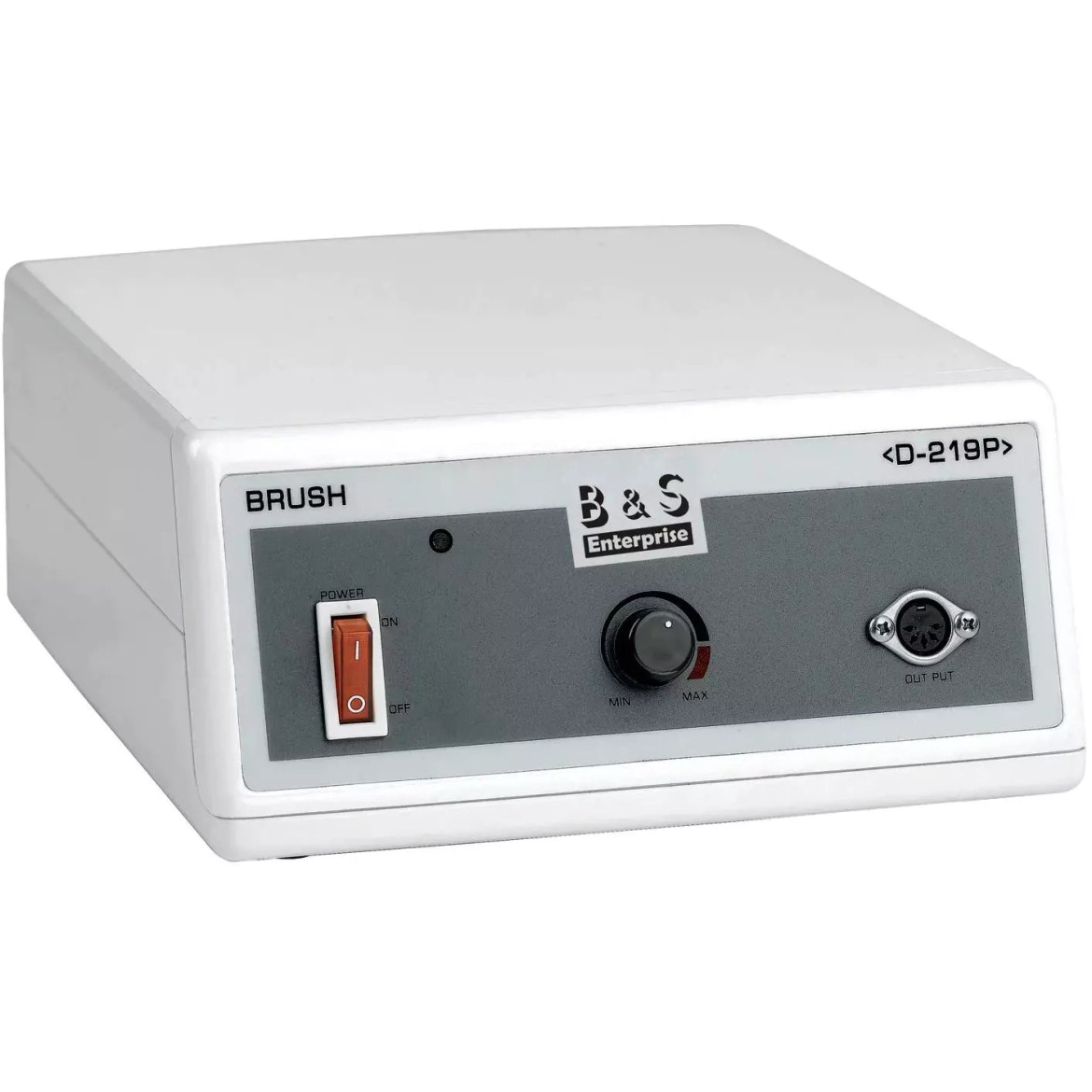
Facial Tightening & Anti-Aging
Facial Rotary Brush Machine
FDA: unverified
Facial Tightening & Anti-Aging
Body Shape RF
FDA: unverified
Facial Tightening & Anti-Aging