Nano Oxygen Sprayer
Your gateway to a rejuvenated and deeply nourished skin through the power of nano mist. This cutting-edge skincare device transcends traditional beauty routines by delivering a burst of pure potent nutrients directly onto your skin with its advance nano mist.
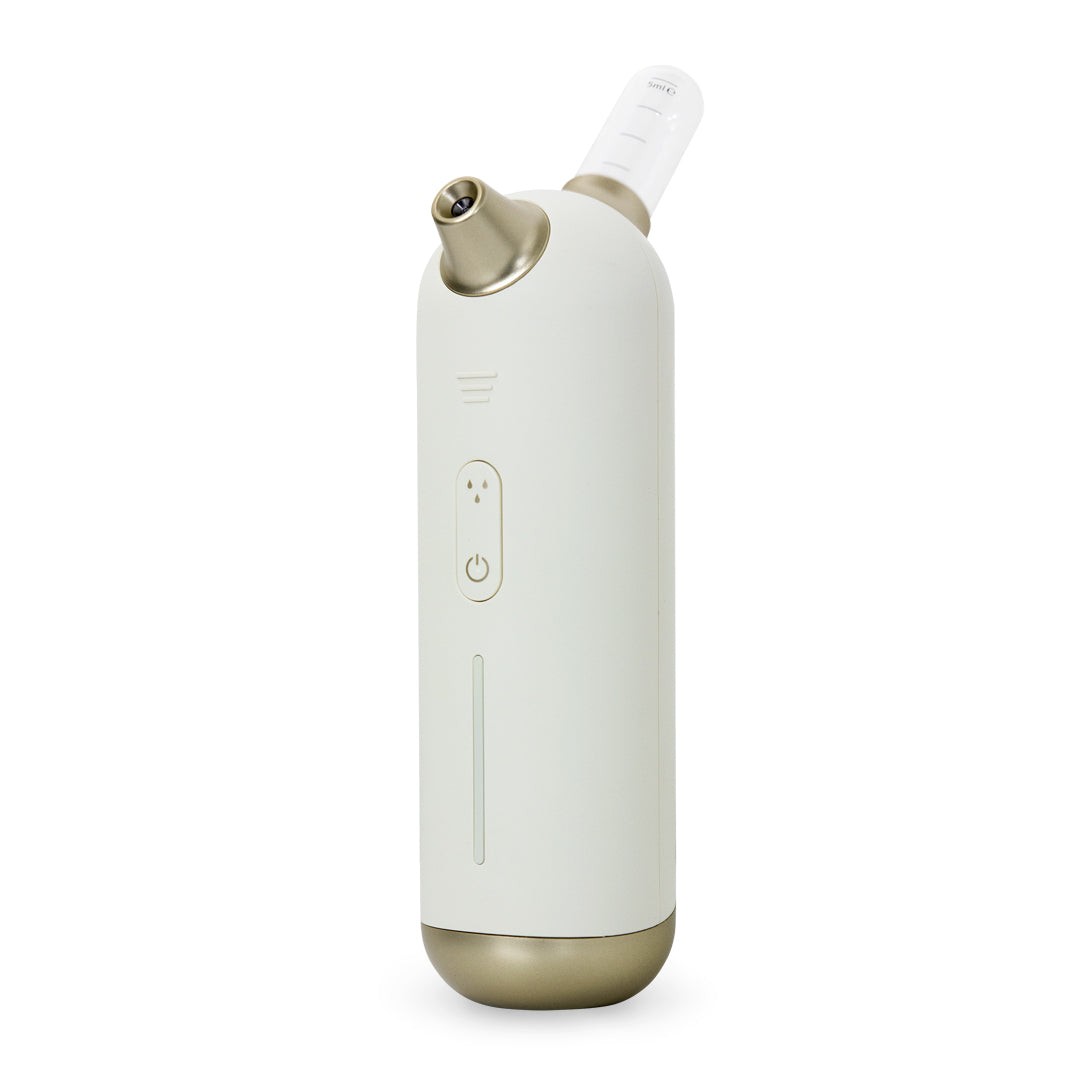
1.What It Is
A skincare device that uses nano mist technology to deliver nutrients directly to the skin. It is designed to enhance traditional facial care routines.
2.How It Works
It produces an advanced nano mist that carries active ingredients onto the skin, improving absorption by skin cells for a revitalizing effect.
4.Who It's For
Home users and skincare enthusiasts seeking to boost ingredient absorption and elevate their at-home facial regimen.
Important: This device page is informational. Verify certifications, operator training, and suitability with a qualified professional before treatment.
5.Frequently Asked Questions
What is the Nano Oxygen Sprayer and what does it treat?+
The Nano Oxygen Sprayer is a skincare device that uses nano mist technology to deliver nutrients directly onto the skin. It produces an advanced nano mist that carries active ingredients onto the skin surface, with the stated aim of improving absorption by skin cells and producing a rejuvenating, deeply nourishing effect. It is positioned as an enhancement to traditional facial care rather than as a tightening or lifting device.
**Key points:**
- Modality: nano-mist / oxygen-infusion delivery of topical actives - a product-delivery device, not an energy device.
- Claimed mechanism per the listing: nano-sized mist carries nutrients onto the skin and improves absorption by skin cells.
- Stated outcome: rejuvenated, deeply nourished skin.
- Positioning note for buyers: the listing's `who_for` field describes the device as intended for **home users and skincare enthusiasts**, even though it sits in a professional equipment category - so verify whether the unit you are quoting is the professional or the consumer variant before building a clinic service around it.
- Useful as a finishing/hydration step after exfoliation, needling or RF, where the skin's absorption capacity is temporarily increased.
**Business case:** Infusion devices monetise the retail product attached to them - every treatment consumes actives, which makes the consumable, not the device, the profit centre. That model only works at clinic volume if the unit is the professional specification, so confirm that before purchase.
**Confidence:** High for the described mechanism and stated outcome (both in the product record); Medium for its clinical positioning, because the listing's own target-user field points to home use rather than professional use.
**Evidence source:** Product listing `skinact-nano-oxygen-sprayer` (id=934), fields: lede, what_it_is, how_it_works, who_for.
Is the Nano Oxygen Sprayer FDA cleared or CE marked?+
The regulatory status of the Nano Oxygen Sprayer cannot be confirmed from the current product data. The structured fields `fda_key`, `fda_label` and `fda_tone` are empty, and the listing text contains no FDA clearance, CE marking or other certification claim. No conclusion can be drawn about either clearance or non-clearance.
**Key points:**
- `fda_key`, `fda_label` and `fda_tone` are all empty on the product record.
- No regulatory statement appears in the lede, what_it_is, how_it_works or who_for fields.
- The listing describes purely cosmetic hydration and absorption benefits (nourishing, revitalising) - no therapeutic claim is made, which is consistent with a cosmetic-equipment classification in most markets.
- The listing's own `who_for` field positions it for home users, which further suggests a consumer cosmetic device rather than a cleared professional medical device.
**⚠️ FLAG - procurement verification required.** Before purchase, obtain from the supplier: (1) the device's regulatory classification in your market (cosmetic equipment versus medical device) and any FDA 510(k) number if one exists, (2) CE marking documentation to EU MDR 2017/745 or UKCA evidence for European deployment, (3) a signed regulatory status letter on company letterhead, (4) IEC 60601-1 or applicable electrical safety certification, and (5) written confirmation that the unit supplied for professional clinic use is the professional specification, not the home-use consumer model.
**Business case:** If a clinic markets nano-mist infusion as a treatment rather than a comfort step, the claim level rises; a written classification statement is what keeps the marketing and the device classification aligned.
**Confidence:** Low - no FDA or equivalent regulatory information of any kind is present in the product data, so no status can be stated.
**Evidence source:** Product listing `skinact-nano-oxygen-sprayer` (id=934), fields: fda_key, fda_label, fda_tone, lede, what_it_is, how_it_works, who_for (all regulatory fields empty).
What is the Nano Oxygen Sprayer treatment protocol?+
The listing describes the nano-mist delivery mechanism but publishes no session count or interval schedule. Use the standard protocol for infusion/mist devices in a professional facial setting and confirm the details with the manufacturer: a course of 6-10 sessions spaced 1-2 weeks apart for cumulative hydration and absorption benefit, with the device normally used as one step inside a fuller facial rather than as a stand-alone appointment.
**Key points:**
- Course: 6-10 sessions at 1-2 week intervals is the standard shape for infusion-led hydration programmes.
- Best sequencing: apply immediately after a step that increases absorption - exfoliation, needling, microcurrent or RF - so the actives reach the skin when uptake is highest.
- Downtime: none; the device is non-invasive and topical, so it can be added to any facial with no recovery requirement.
- Maintenance: ongoing - because hydration and barrier benefit are transient, this is a repeat-frequency service best sold as an in-facial upgrade rather than a stand-alone course.
- Confirm the actives used: nano-mist devices deliver whatever is put in the reservoir, so the ingredient list of your chosen serum becomes the clinical substance of the treatment.
**Business case:** Infusion technologies are sold on the consumable, not the hardware - the device justifies the serum, and the serum drives repeat purchase. Price it as a per-session add-on so profit scales with treatment frequency rather than with a one-off device sale.
**Confidence:** Low to Medium - the delivery mechanism and non-invasive nature are product-documented; the session counts, intervals and sequencing are standard professional practice for infusion devices, not published specifications, and the listing gives no protocol at all.
**Evidence source:** Product listing `skinact-nano-oxygen-sprayer` (id=934), fields: lede, what_it_is, how_it_works, who_for.
Is the Nano Oxygen Sprayer suitable for all skin types?+
The listing publishes no Fitzpatrick skin-type restriction or contraindication table for the Nano Oxygen Sprayer. Because the device is topical and non-invasive (it delivers a mist of actives onto the skin surface), skin-type pigmentation risk is negligible; the clinically relevant question is how the skin tolerates the specific actives being infused.
**Key points:**
- No Fitzpatrick range, skin-type claim or contraindication list appears anywhere in the product record.
- Safety is governed by the product in the reservoir, not by the device: check the serum for fragrance, alcohol, acids and photosensitisers before use on reactive or Fitzpatrick IV-VI skin.
- Screen for allergy to any infused ingredient and patch-test new actives, especially on barrier-compromised or post-procedure skin.
- Use on intact skin only - do not mist over open lesions, or over recently treated (needled or lasered) areas without manufacturer guidance.
- The listing's target user is the home consumer, so professional-grade cleaning of the reservoir and nozzle between clients must be established by the clinic itself; no hygiene protocol is published.
**Business case:** Because the device is effectively a delivery system for the serum, your ingredient-liability exposure is higher than the hardware cost suggests - a standardised, patch-tested active and a written hygiene protocol for the reservoir are what make this service safe to scale across operators.
**Confidence:** Low - no skin-type or contraindication information of any kind is present in the product data; the guidance above is standard professional practice for topical infusion devices, not product-documented specification.
**Evidence source:** Product listing `skinact-nano-oxygen-sprayer` (id=934), fields: lede, what_it_is, how_it_works, who_for.
6.Similar Devices
FDA: unverified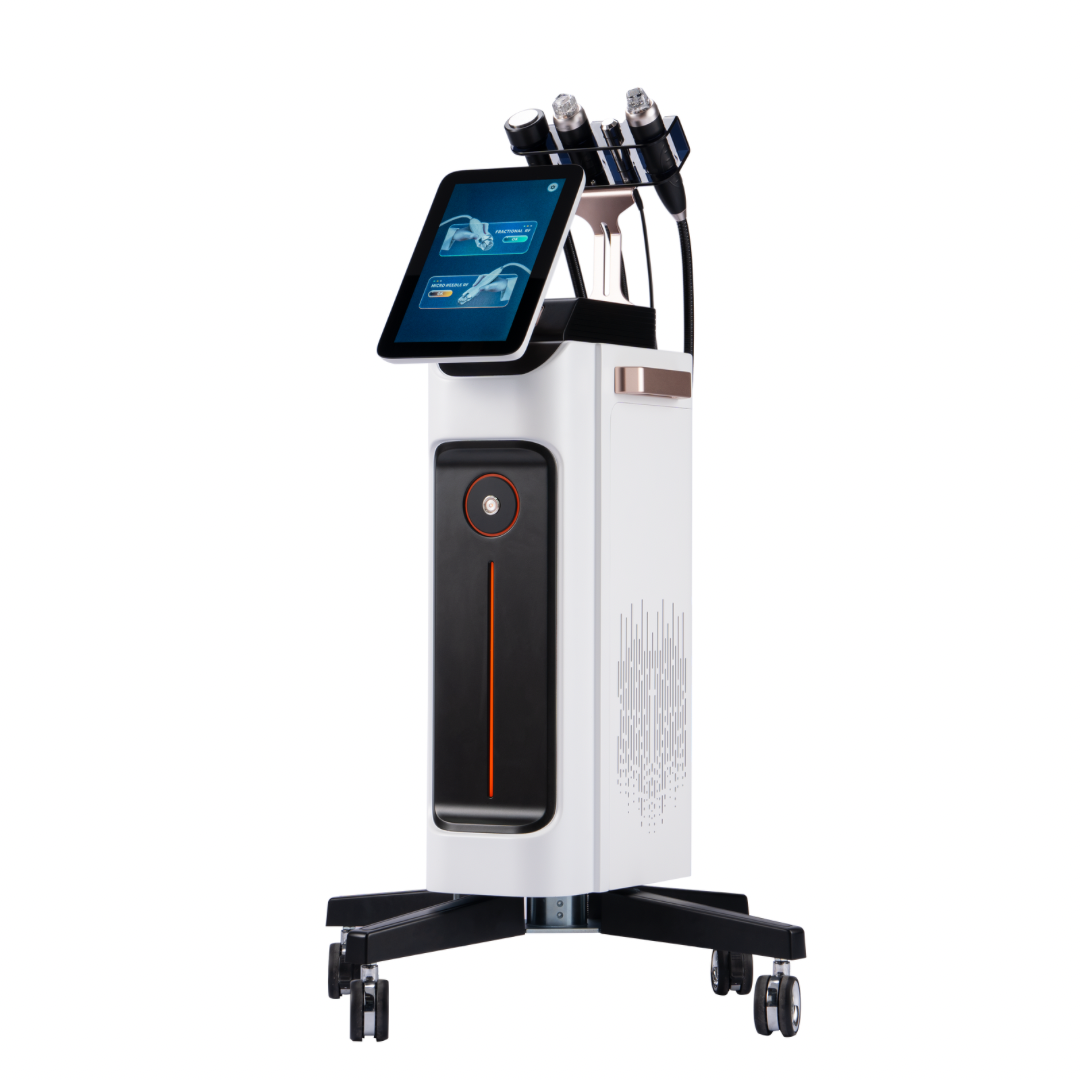
Facial Tightening & Anti-Aging
Proteus-V RF Micro-needle + Thermagica Fractional RF System
FDA: unverified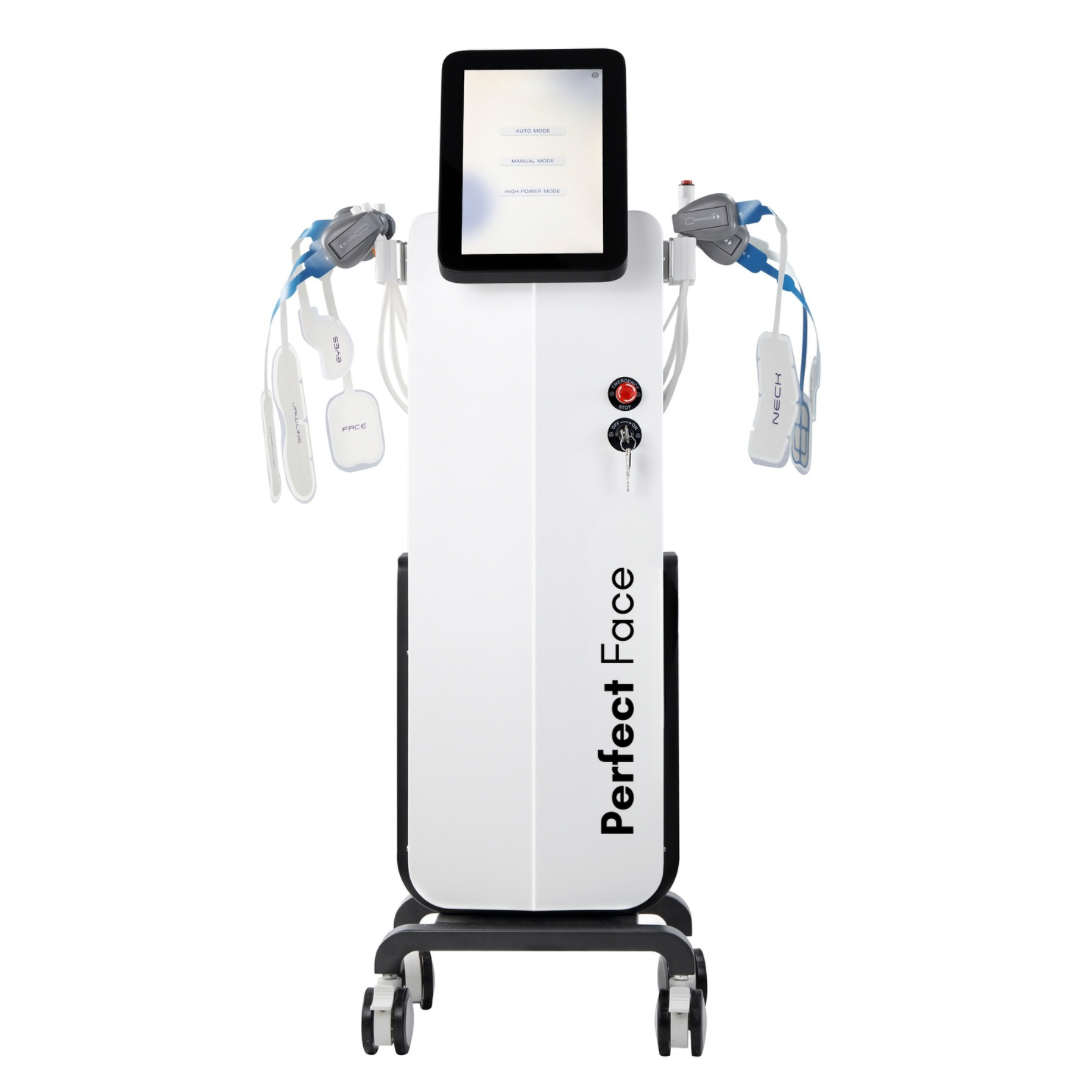
Facial Tightening & Anti-Aging
Professional PERFECT FACETM NEO Skin Ultra 7D
FDA: unverified
Facial Tightening & Anti-Aging