XCellarisPRO Twist
The XCellarisPRO Twist is an FDA-cleared Class II microneedling device with patented Active Retrieval and Endless Needle geometry — the world’s fastest clinical microneedling system for skin renewal, deep collagen stimulation and fast recovery.
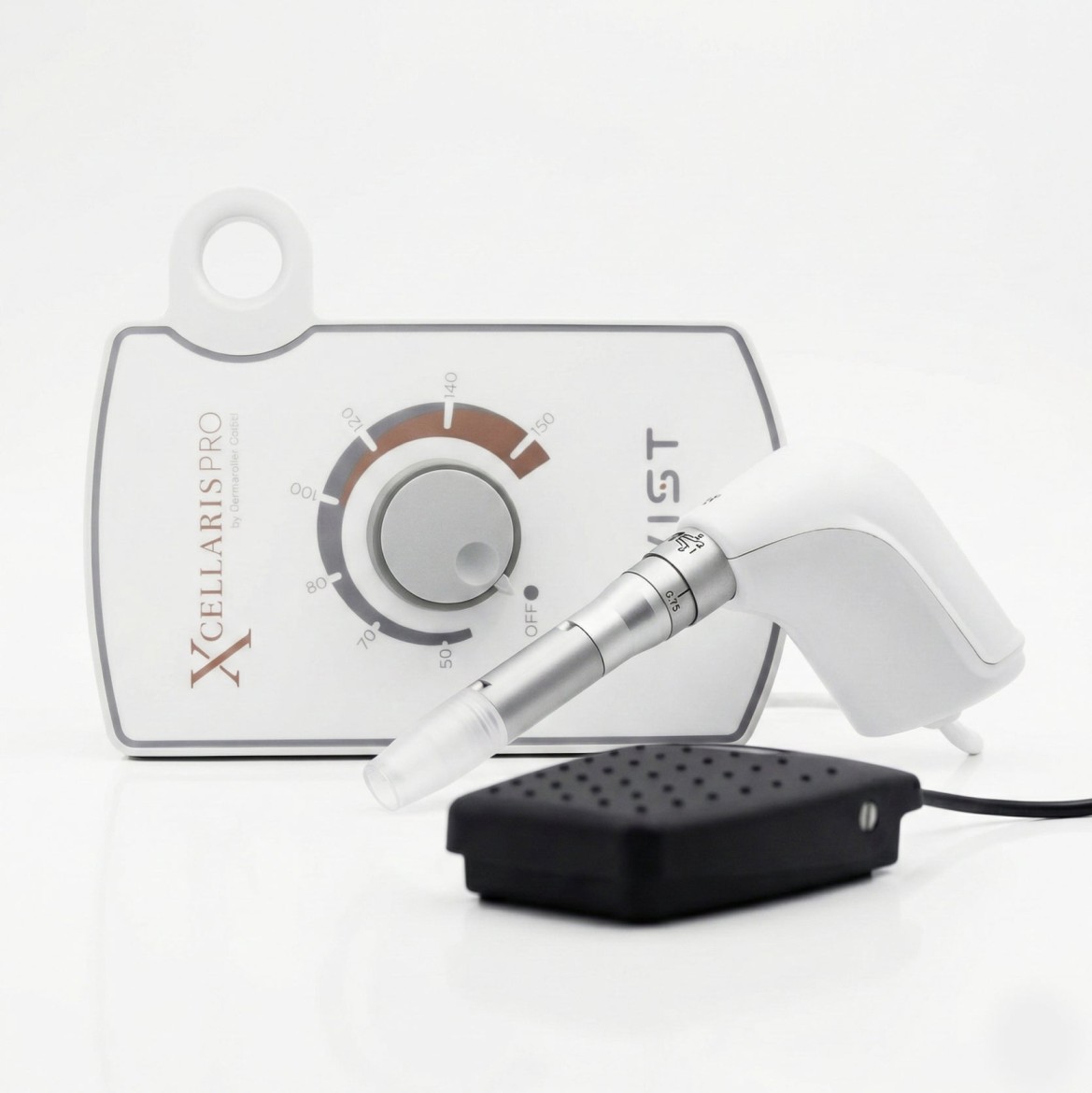
1.What It Is
The XCellarisPRO Twist is an FDA-cleared Class II microneedling device designed for clinical skin renewal and collagen stimulation.
2.How It Works
It uses patented Active Retrieval and Endless Needle geometry, and is described as the fastest clinical microneedling system, supporting deep collagen stimulation and fast recovery.
4.Who It's For
Suited to clinicians and skincare professionals performing microneedling treatments in clinical settings.
Important: This device page is informational. Verify certifications, operator training, and suitability with a qualified professional before treatment.
5.Frequently Asked Questions
What is the XCellarisPRO Twist and what does it treat?+
The XCellarisPRO Twist is a clinical microneedling device for skin renewal and collagen stimulation, built around two patented needling technologies - Active Retrieval and Endless Needle geometry. The listing positions it as the fastest clinical microneedling system available, aimed at practitioners who need to deliver needle-based collagen induction at scale in a clinical setting.
**Key points:**
- Mechanism: mechanical microneedling that creates controlled micro-channels to stimulate collagen - described by the listing as 'deep collagen stimulation' with 'fast recovery'.
- Differentiation: active needle retrieval plus an endless-needle geometry, rather than a fixed or reciprocating needle cartridge.
- Positioning: clinical (professional) use by skincare professionals and clinicians, not a home device.
- Classified as a Class II device by its own listing text.
- Complements the RF and HIFU devices in this category: microneedling remodels collage from the surface down, where HIFU and fractional RF work deeper.
**Business case:** Speed per treatment is the commercial differentiator here - a faster needling pass means shorter room time per session and more bookable cases per day, which is the metric that determines payback on a needling platform. It also pairs naturally as the resurfacing half of a combined protocol with a fractional RF or HIFU lifting device.
**Confidence:** High - mechanism, positioning and Class II status are all stated in the product listing itself.
**Evidence source:** Product listing `xcellaris-pro-twist` (id=1097), fields: lede, what_it_is, how_it_works, who_for.
Is the XCellarisPRO Twist FDA cleared?+
The listing text states that the XCellarisPRO Twist is an 'FDA-cleared Class II microneedling device', so the manufacturer claim on record is a US Class II clearance - which in FDA terms means 510(k) premarket notification, i.e. the device is **cleared**, not **approved**. The structured regulatory fields on the product record (`fda_key`, `fda_label`, `fda_tone`) are empty, so the claim exists in prose only and should be independently verified before purchase.
**Key points:**
- Claim on record: 'FDA-cleared Class II microneedling device' (from the listing text).
- Correct terminology: Class II + 510(k) = cleared. 'FDA approved' is applicable to Class III PMA devices and would be incorrect for this class.
- Structured fields `fda_key`, `fda_label` and `fda_tone` are empty on the product record, so the clearance is not machine-verified in the catalogue data.
- Clearance is indication-specific - obtain the cleared indication wording, not just the number.
**Business case:** For a needling device used on paying patients, clearance documentation is an insurance and inspection requirement, not a nicety. Put the 510(k) number and cleared indication wording on the purchase order so the claim is auditable.
**⚠️ Procurement verification required:** obtain the 510(k) clearance number (format K######), the FDA establishment registration and the cleared indication statement from the supplier, plus CE/UKCA or Health Canada documentation for non-US deployment.
**Confidence:** Medium - a clearance claim is explicitly present in the listing text, but the structured FDA metadata fields are empty and no 510(k) number is published.
**Evidence source:** Product listing `xcellaris-pro-twist` (id=1097), fields: lede, what_it_is, fda_key, fda_label, fda_tone.
How many XCellarisPRO Twist sessions does a client need, and at what intervals?+
The product record describes the mechanism and the 'fast recovery' profile but does not publish a session count or interval schedule. Apply the standard clinical microneedling protocol for this device class and confirm the exact schedule with the manufacturer: a course of 3-6 sessions spaced 3-4 weeks apart for facial skin renewal and collagen stimulation, then maintenance every 2-3 months.
**Key points:**
- Course: 3-6 sessions, 3-4 weeks apart - collagen remodelling follows the 4-week dermal cycle, so shorter intervals do not add benefit.
- Needle depth is scaled to indication: superficial passes for texture and product infusion, deeper passes for scars and laxity.
- The listing claims 'fast recovery'; downtime for clinical microneedling is typically 24-72 hours of redness, which makes it a low-disruption addition to a lunchtime menu.
- Maintenance: one session every 2-3 months sustains results and provides recurring revenue.
- Post-treatment: no active exfoliants or retinoids for 48-72 hours; broad-spectrum SPF is mandatory.
**Business case:** Needling fits a stacked-protocol price model - couple it with a fractional RF or HIFU session to justify premium package pricing, using microneedling for surface and the energy device for depth. The short downtime also means minimal impact on the client's work schedule, which improves rebooking.
**Confidence:** Medium - mechanism and fast-recovery positioning are product-documented; the specific session count and intervals are standard clinical practice for this device class, not published in the listing.
**Evidence source:** Product listing `xcellaris-pro-twist` (id=1097), fields: lede, what_it_is, how_it_works, who_for.
Is the XCellarisPRO Twist suitable for all skin types, including Fitzpatrick IV-VI?+
The listing does not publish a Fitzpatrick skin-type restriction for the XCellarisPRO Twist, and the device is described only as suitable for clinicians performing microneedling in clinical settings. Because microneedling is a controlled mechanical injury, the standard clinical caution for darker skin applies: plan more conservative needle depth and pass counts for Fitzpatrick IV-VI clients, where post-inflammatory hyperpigmentation (PIH) risk is elevated.
**Key points:**
- No Fitzpatrick range or skin-type contraindication is stated anywhere in the product record - do not assume any specific claim of all-skin-type suitability.
- Fitzpatrick IV-VI: reduce depth and passes, consider pre-treating with a depigmenting regimen, and document the consent conversation.
- Absolute contraindications to screen for: isotretinoin use within 6 months, active acne or infection in the treatment area, anticoagulant therapy, keloid tendency, and pregnancy.
- No device in this catalogue makes an all-skin-type claim for needling - the all-types statement on record belongs to Goldskin Fractional Micro Needle RF (id=685).
**Business case:** Documented skin-type screening and conservative parameters are what make a needling service insurable and defensible; PIH claims are the most common adverse event in needle- and energy-based treatments.
**Confidence:** Medium - absence of a skin-type claim in the data is confirmed; the Fitzpatrick IV-VI guidance is standard clinical practice for microneedling, not a product-documented specification.
**Evidence source:** Product listing `xcellaris-pro-twist` (id=1097), fields: lede, what_it_is, how_it_works, who_for; cross-reference `goldskin-fractional-radiofrequency-for-face-and-body` (id=685), field: who_for.
6.Similar Devices
FDA: unverified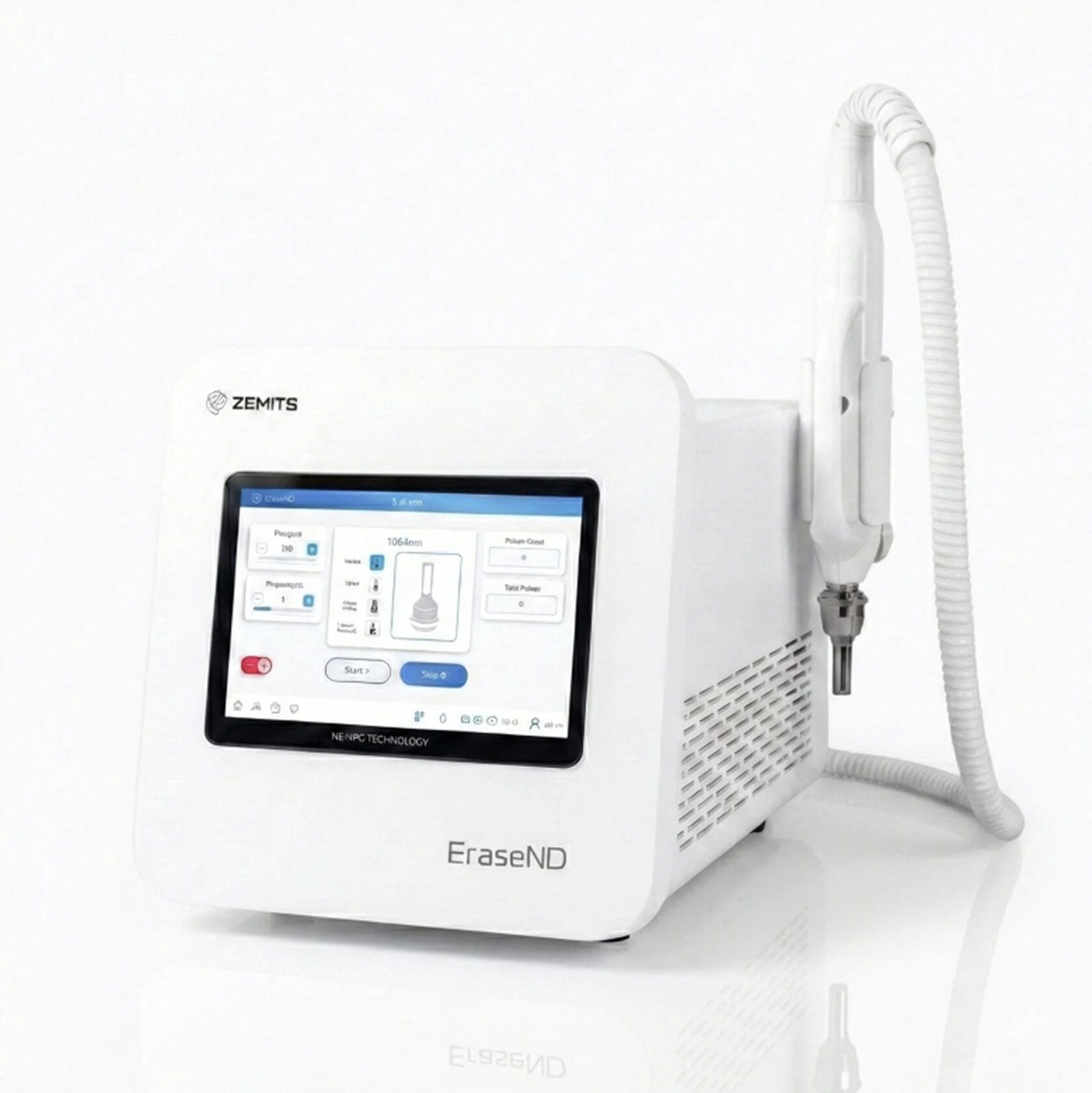
Facial Tightening & Anti-Aging
Zemits EraseND
FDA: unverified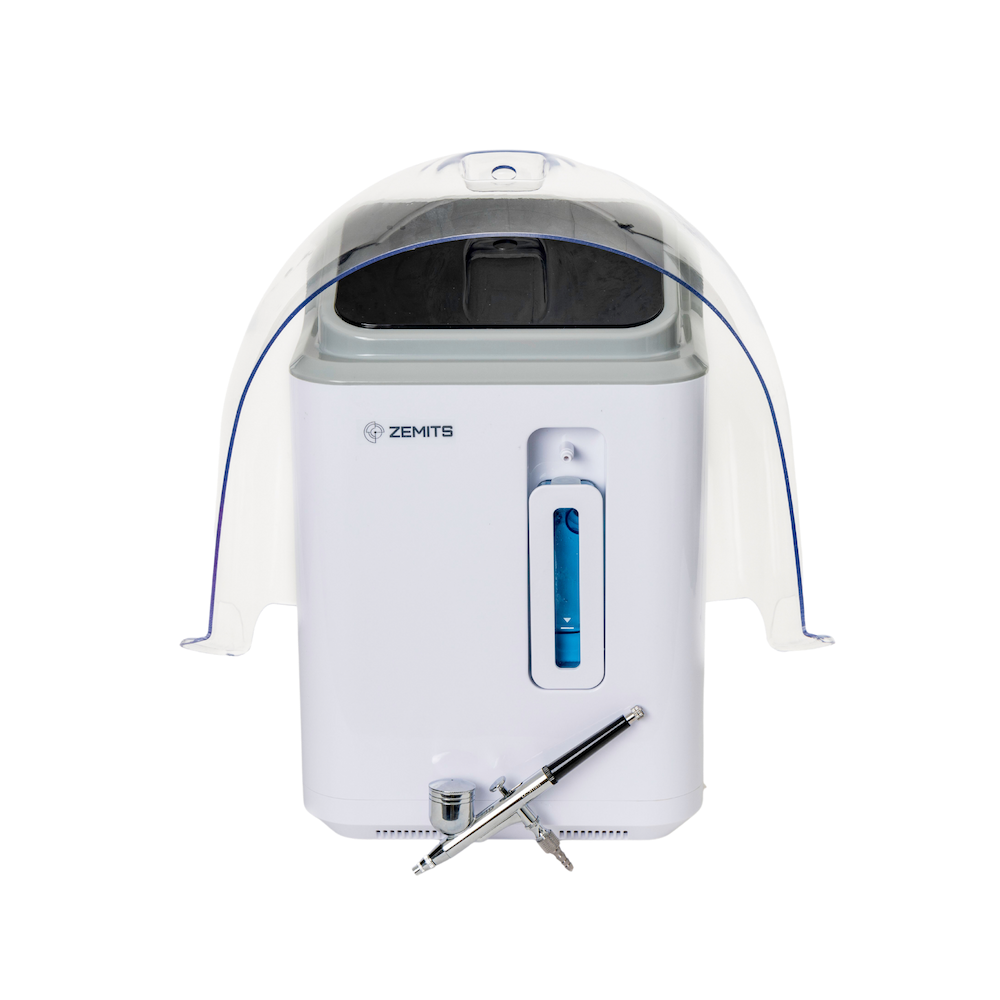
Facial Tightening & Anti-Aging
Zemits OxiVelour
FDA: unverified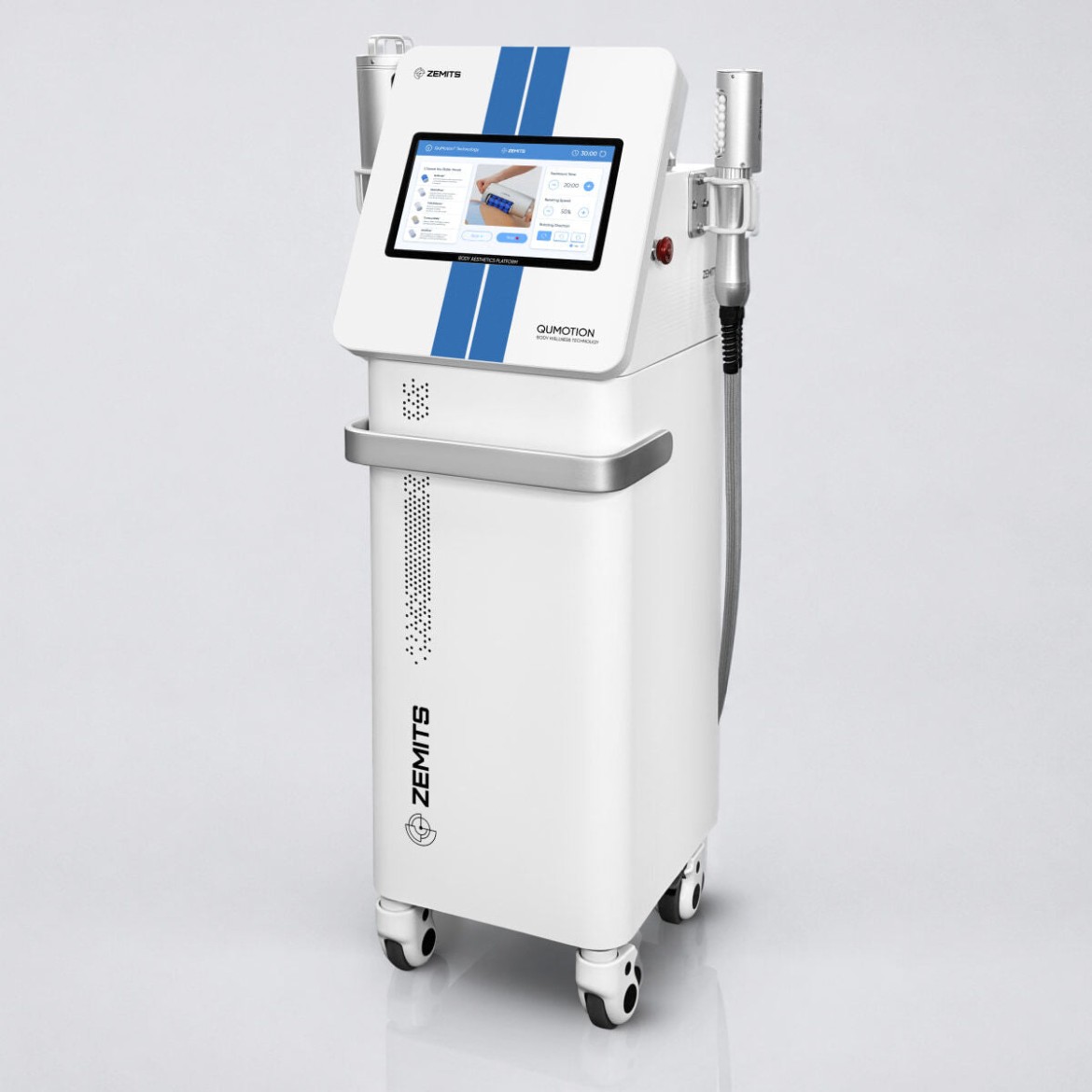
Facial Tightening & Anti-Aging